UP TO 1 MONTH FREE ON BASE RENT
Plus a Look and lease $500 waived amenity fee.
Minimum terms apply. Other costs & fees excluded. New applicants only.
If you start researching where to live in Arlington, Virginia, you’ll quickly run into a confusing mix of names, overlapping boundaries, and tiny micro-districts. Officially, Arlington has dozens of recognized neighborhoods and civic associations.
An easier way to understand Arlington is to zoom out and think in terms of a few core areas, shaped by transit, density, and how people live day to day:
The Rosslyn–Ballston corridor is Arlington’s most urban and transit-oriented part of the county. It runs along the Orange and Silver Metro lines and includes a series of dense, walkable districts centered around major stations: Rosslyn, Courthouse, Clarendon, Virginia Square, and Ballston. This is where Arlington feels most like a city. The corridor is defined by:
If you’re searching for the most walkable neighborhoods in Arlington, or you want the best transit access for commuting into DC, this is where most of that activity is concentrated.
North of the Metro corridor, Arlington shifts into a more residential, lower-density pattern. This part of the county is known for:
North Arlington is popular with people who want to stay close to the action and job centers, but prefer a quieter home base that feels more suburban in character.
South Arlington is larger, more spread out, and more diverse in how it’s laid out. Compared to the Rosslyn–Ballston corridor, it tends to be:
Some parts of South Arlington are very residential. Others have their own shopping districts and activity hubs. It’s a good fit for people who want more space, more housing variety, or a less urban day-to-day environment while still staying in Arlington County.
On the eastern side of Arlington, Crystal City and Pentagon City form another major high-density, transit-rich district, often grouped under the name National Landing. This area is shaped by:
While it shares the density and transit access of the Rosslyn–Ballston corridor, it feels more like a major employment and regional hub than a string of neighborhood districts.
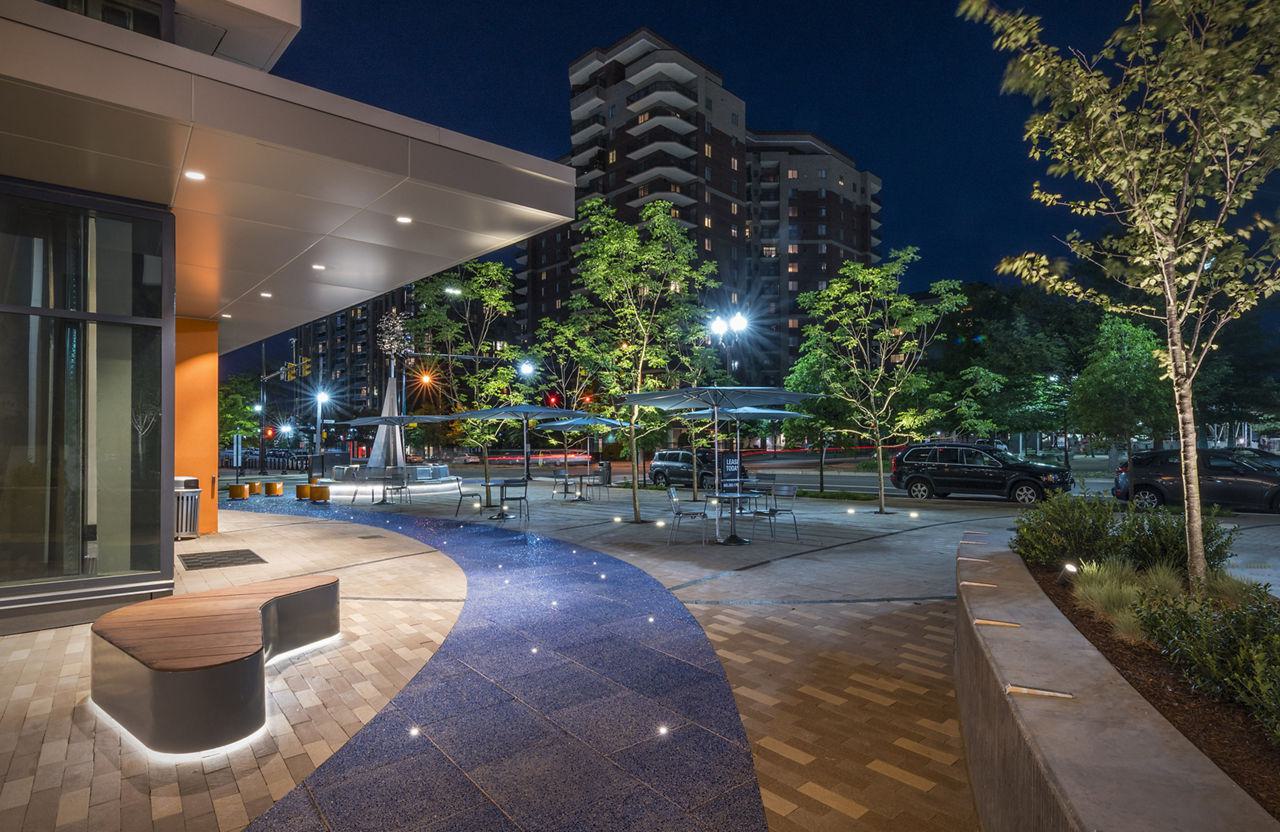
Virginia Square sits squarely along the Rosslyn–Ballston corridor, right in the heart of Arlington’s most walkable and transit-connected area. It offers the same easy access to Metro, dining, and daily conveniences as neighboring districts like Clarendon and Ballston, with a slightly more balanced, residential feel. Latitude offers modern apartment living in the middle of this connected corridor. For renters who want strong transit access, a genuinely walkable neighborhood, and a well-designed, luxe place to live, Latitude is a top choice.
Is Arlington basically part of Washington, DC?
No—Arlington is in Virginia, but it sits directly across the river and functions as part of the DC region. In many areas, your commute, transit access, and day-to-day errands can feel as seamless as living in the District.
Is Rosslyn the same as Ballston?
They’re different districts, but they’re connected by the same Metro “spine” (Rosslyn–Ballston) and share a similar walkable, apartment-forward lifestyle. Rosslyn is closest to DC and tends to feel more office-centric; Ballston is farther west and often feels a little more neighborhood-balanced while still being dense and active.
Is National Landing a real neighborhood?
National Landing is a planning/branding name that groups Crystal City and Pentagon City (and nearby areas) into one district. People still use Crystal City and Pentagon City as the everyday place names, but “National Landing” is common in development and employer messaging.
Which part of Arlington is best if I want to live without a car?
Look first at the Rosslyn–Ballston corridor (Rosslyn, Courthouse, Clarendon, Virginia Square, Ballston), where daily needs are easiest to do on foot and Metro is built into the area. Parts of Crystal City and Pentagon City can also work well car-free, especially if you want quick airport access and strong regional connectivity.
Is North or South Arlington better?
Neither is universally better—it depends on the lifestyle you want. North Arlington tends to be quieter and more residential with more single-family streets and parks; South Arlington is broader and more varied, with different pockets that range from very residential to more corridor-based, car-oriented convenience.
How should I choose where to live in Arlington?
Start with two questions: Where do you commute to, and how walkable do you want daily life to be? Then compare areas by Metro access, the distance from home to groceries/coffee/fitness on foot, and whether you want an urban “district” feel or a more residential neighborhood pattern.
Why do so many people choose to live in Arlington?
It’s one of the few places that consistently combines DC proximity, Metro access, walkable districts, and strong neighborhood quality of life in the same county. For many renters, it’s the balance of convenience and livability: close-in, connected, and easier to navigate day to day.